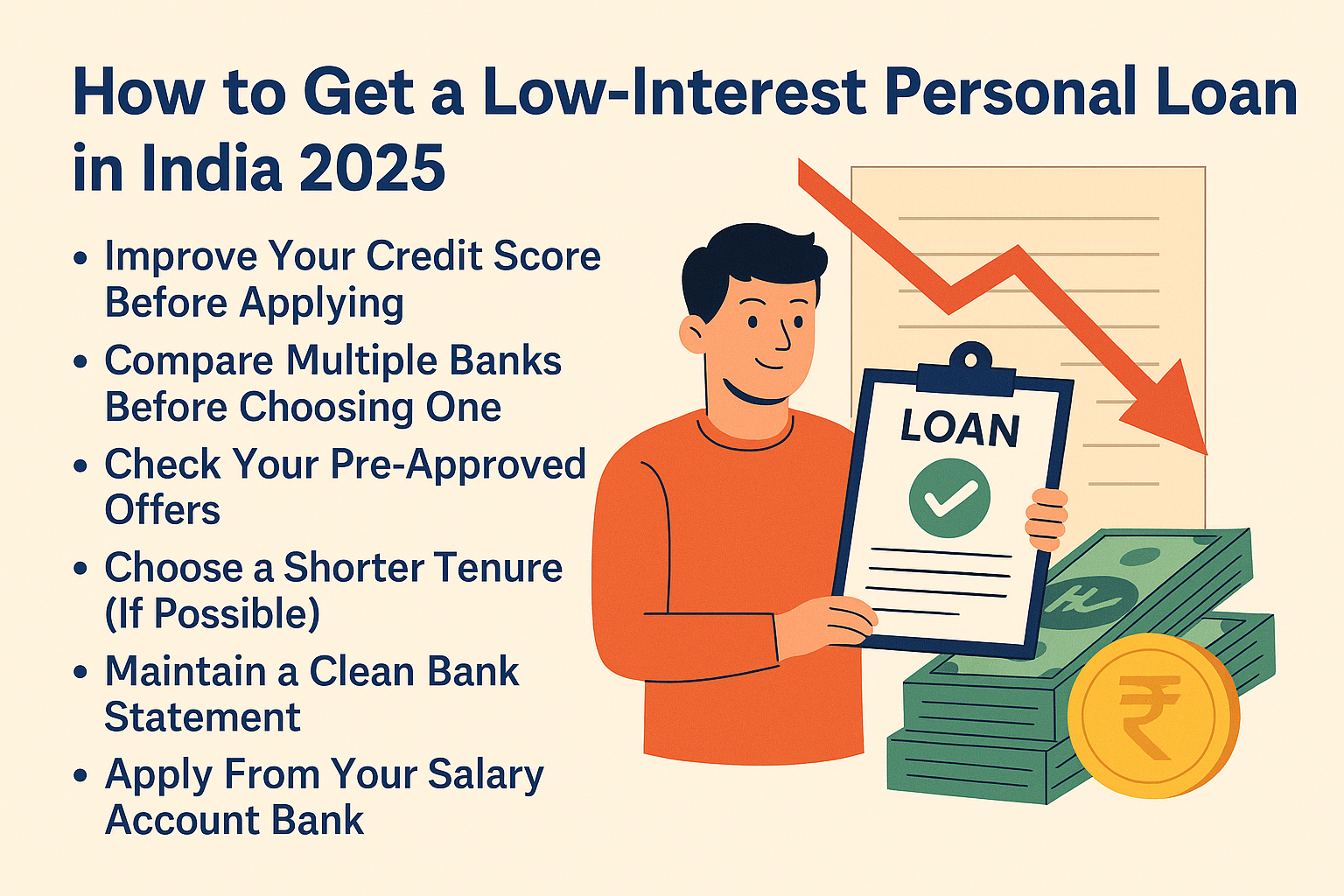
Finding a low-interest personal loan in India has become easier than ever, but most people still end up paying more than they should. The reason is simple — lack of information. When you know where to apply, how to compare rates, and what factors affect your loan eligibility, you can save a huge amount of money over the period of repayment. In 2025, banks and NBFCs are offering far better rates than before, especially to people who prepare themselves before applying.
In this guide, we’re going to walk through every step of getting a low-interest personal loan in India. This includes understanding how interest rates work, which banks offer the best deals, what documents are required, and how to increase your chances of approval. By the end of this article, you’ll know exactly how to get the lowest possible rate with minimum hassle.
What Exactly Is a Low-Interest Personal Loan?
A low-interest personal loan simply means a loan that costs you less over time. The interest rate is the amount the bank charges you for borrowing the money. In India, personal loan interest rates usually range from 9% to 24% per year. A low-interest loan is typically considered anything below 12%.
The rate you get depends on your income, credit score, repayment history, employment type, and even the bank’s internal policy. If you understand these factors and prepare ahead, the lender will consider you less risky—and offer you a better rate.
Why 2025 Is the Best Time to Apply for a Low-Interest Loan
The financial market in 2025 has become more competitive. More banks, more NBFCs, and many digital loan platforms are aggressively reducing their interest rates to attract borrowers with good credit profiles. Because of this competition, interest rates have become flexible and negotiable.
These are the main reasons why 2025 is a great year to get a loan:
- Digital verification has become faster
- Pre-approved offers are easier to get
- Banks are giving lower rates to salaried professionals
- Loan comparison tools have improved
- RBI regulations made loan terms more transparent
All of this works in your favor — if you apply smartly.
Current Personal Loan Interest Rates in India (2025)
Here’s a simplified look at average interest rates in 2025:
- HDFC Bank: From 10.50% onwards
- ICICI Bank: From 10.65% onwards
- Axis Bank: From 10.49% onwards
- Kotak Mahindra: From 10.75% onwards
- State Bank of India (SBI): From 10.30% onwards
- IDFC First Bank: From 10.99% onwards
- Bajaj Finance: From 11.00% onwards
These rates can change, but most lenders offer lower interest to people with stable jobs, high credit scores, and clean banking records.
How to Get the Lowest Interest Rates (Practical Tips That Work)
Getting a low-interest personal loan is not just luck—it’s strategy. Here are the methods that work in real life:
1. Improve Your Credit Score Before Applying
Your credit score is the biggest factor that decides your interest rate. A score above 750 gives you the highest chance of getting a low rate. If your score is below 700, the lender considers you risky and charges extra.
To improve your score:
- Pay all EMIs on time
- Keep credit card usage below 30%
- Avoid applying for multiple loans
- Check your report for errors
- Clear old dues if any
Even a 20–30 point increase can reduce your interest rate significantly.
2. Compare Multiple Banks Before Choosing One
Many people directly apply to their salary bank, but this is a mistake. Every bank offers different rates depending on your profile. Use online comparison tools or manually check each bank’s official website.
Compare these details:
- Interest rate
- Processing fee
- Prepayment charges
- Minimum income requirement
- Loan tenure
The goal is not just to find the lowest rate but the best overall offer.
3. Check Your Pre-Approved Offers
If you have a long relationship with a bank, chances are you have pre-approved loan offers. These offers come with lower interest rates because the bank already trusts your repayment ability.
Most banks send these via:
- SMS
- Net banking
- Mobile banking app
Pre-approved loans also have faster approval.
4. Choose a Shorter Tenure (If Possible)
Banks often give a lower rate for shorter loan tenures because they take less risk. If you can handle higher EMIs, choosing a shorter tenure can help you save money in the long run. Even reducing your tenure by one year can save thousands in interest.
5. Maintain a Clean Bank Statement
Banks closely check the last 6 months of your bank statement. If you regularly use your account, maintain a healthy balance, and avoid cheque bounces, your chances of getting a low interest rate increase.
Avoid these red flags:
- Overdraft
- Frequent cash withdrawals
- EMI bounce
- Salary delay
- Large gambling or betting transactions
6. Apply From Your Salary Account Bank
If you are a salaried professional, applying from the bank where you receive your salary can get you a discounted rate. Banks trust their existing customers more because they can track your income pattern easily.
7. Negotiate the Rate With Reason
Most borrowers don’t know that loan interest rates can be negotiated. If you have a high salary or a strong credit score, you can politely request the bank to lower the rate. This approach often works with private banks and NBFCs.
Eligibility Criteria for Low-Interest Personal Loans (2025)
Almost all banks have similar requirements. Here’s what they check:
- Age between 21 to 60 years
- Salary above ₹20,000–₹25,000 per month
- At least 1 year of working experience
- Credit score above 700
- Clean banking history
- KYC documents ready
For self-employed applicants:
- Minimum business history of 2–3 years
- Stable income proof
- Good business banking balance
Documents Required for Personal Loans
You will need:
- Aadhaar card or PAN card
- Address proof
- Salary slips (last 3 months)
- Bank statement (last 6 months)
- Form 16 (optional)
- Passport-size photo
For self-employed:
- GST details
- ITR of last 2 years
- Business bank statements
- Business registration documents
Step-by-Step Process to Apply for a Low-Interest Personal Loan
Follow these steps:
Step 1: Check your credit score
Make sure it’s above 750 for the best rates.
Step 2: Compare interest rates of different lenders
Don’t choose the first option — research saves money.
Step 3: Check eligibility online
Most banks offer instant eligibility checks on their websites.
Step 4: Apply online or offline
Fill out the form and upload your KYC documents.
Step 5: Verification by the bank
They verify your income, bank statement, and credit profile.
Step 6: Loan approval and agreement signing
Once approved, review all terms carefully.
Step 7: Loan disbursal
The money is credited to your account within hours or 1–2 days.
Common Mistakes to Avoid
- Applying for too many loans at the same time
- Not checking hidden charges
- Choosing a long tenure just for lower EMIs
- Ignoring prepayment options
- Not reading the loan agreement carefully
Avoiding these mistakes will help you get a smoother loan experience.
FAQs
1. What is considered a good interest rate for a personal loan in India?
A good interest rate in India is usually anything below 12% per annum. The rate depends on your credit score, income, job stability, and existing liabilities. If your profile is strong, many banks will offer you competitive rates. Always compare multiple banks before choosing one.
2. Can I get a personal loan with a low salary in 2025?
Yes, several banks and NBFCs offer personal loans to people with salaries starting from ₹15,000–₹20,000 per month. However, the interest rate may be slightly higher. To get a lower rate, try improving your credit score and maintaining a clean bank statement. Online lenders also provide flexible options.
3. Do personal loans require collateral in India?
No, personal loans in India are unsecured, which means you don’t need any collateral. Approval is based on your income, repayment capacity, and credit score. Since no security is required, banks charge higher interest rates. A strong credit profile helps you get lower rates easily.
4. Can I repay my personal loan early to save interest?
Yes, early repayment or prepayment helps you save a significant amount of interest. Some lenders charge a small fee for preclosure, while others offer it for free. Before taking a loan, always check the prepayment terms. Paying your loan early reduces financial stress and total cost.